
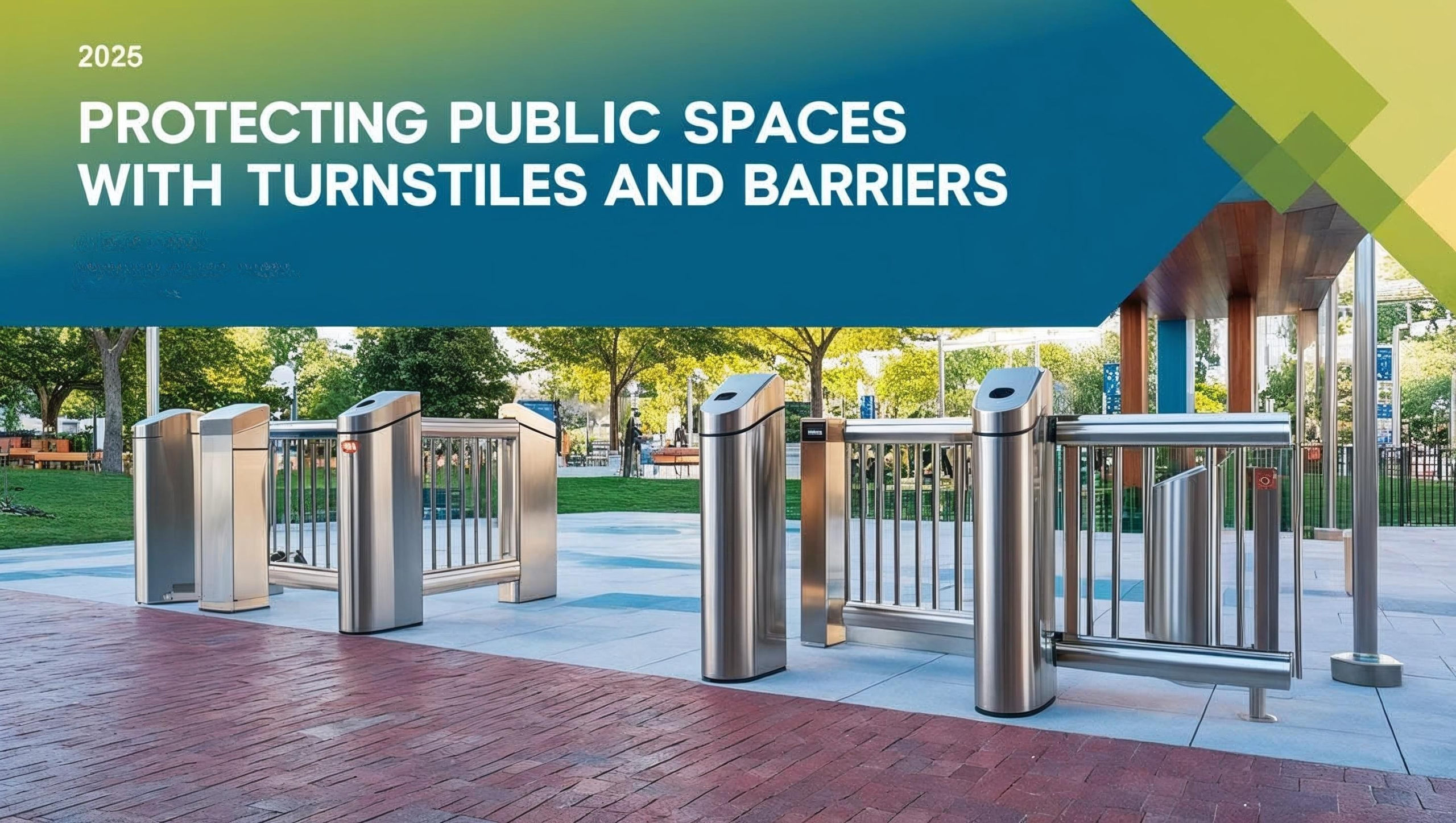
From crowded train stations to bustling shopping malls and school campuses, securing public spaces has never been more critical than it is today. With increasing foot traffic, heightened safety concerns, and evolving threats, public facilities need innovative security measures to protect both people and property.
Turnstiles and barriers are not just simple access control tools; they are integral components of modern security ecosystems. This blog explores why they are essential, the benefits they provide, and emerging trends shaping the future of public space security. We will also highlight how MDS’s turnstile and barrier solutions can be your go-to option for securing public spaces in 2025 and beyond.
The Importance of Public Space Security
Public spaces like train stations, shopping malls, stadiums, and educational institutions are hubs of activity. However, this high density of people also makes them soft targets for vandalism, theft, and other security threats. Security professionals and facility managers are increasingly tasked with finding effective ways to protect these spaces.
Traditional security practices such as human patrols and static guards, while still relevant, often fall short when it comes to managing large crowds or monitoring multiple access points simultaneously. This is where security infrastructure like turnstiles and barriers steps in, enabling facilities to enhance physical security and manage access effectively without disrupting the flow of legitimate visitors.
Overview of Turnstiles and Barriers
Turnstiles and barriers have come a long way from their initial use as rudimentary crowd control tools. Today, they incorporate advanced technologies designed to streamline access management while maintaining a robust line of defence.
What are Turnstiles?
Turnstiles are mechanical gate systems that regulate the flow of people through an access point. Often seen at train stations and stadiums, turnstiles are designed to allow entry to authorised individuals while restricting unauthorised access.
What are Barriers?
Barriers serve a dual role, functioning both as access control devices and as physical shields that prevent vehicle or pedestrian trespassing. They are often found at garage entrances, airports, and government facilities.
Modern turnstiles and barriers are integrated with features like biometric scanners, RFID readers, and facial recognition systems, enhancing their capabilities and versatility.
Benefits of Turnstiles and Barriers in Public Spaces
1. Improved Safety and Security
Turnstiles and barriers act as the first line of defence, deterring unauthorised entry and ensuring controlled access. This reduces the risk of incidents ranging from petty theft to larger security threats. Integrated alarm systems can instantly notify authorities of attempted breaches, ensuring prompt action.
2. Efficient Crowd Management
Facilities with high foot traffic, like metro stations and sports venues, benefit enormously from turnstiles and barriers. These systems regulate crowd flow and reduce congestion, ensuring safer and more organised movement within the space.
3. Enhanced Monitoring Capabilities
Many modern turnstiles and barriers come equipped with tracking and monitoring technologies. These tools allow facility managers to collect data, such as peak traffic hours and entry patterns, which can be valuable for optimising operations.
4. Cost-Effective Security
Deploying turnstiles and barriers can significantly reduce the need for human guards. While initial installation costs may seem high, the savings over time make them a cost-effective solution for public space security.
5. Integration with Smart Systems
Many turnstiles and barriers integrate seamlessly with broader security systems, such as CCTV cameras and access control software. This provides a centralised, real-time view of facility security and allows for quick decision-making in critical situations.
Types of Turnstiles and Barriers Available
1. Waist-High Turnstiles
A common choice for train stations and gym facilities, waist-high turnstiles are simple yet efficient. They are typically used for controlling pedestrian traffic and can be installed with card readers for additional security.
2. Full-Height Turnstiles
For high-security areas like prisons or industrial facilities, full-height turnstiles offer maximum deterrence. They often feature biometric integrations, ensuring that only authorised personnel gain access.
3. Retractable Gates
These are ideal for entry/exit points where large items or wheelchair access needs to be accommodated. Retractable gates provide flexible, scalable security for diverse scenarios.
4. Boom Barriers
Boom barriers are most common in car parks and toll booths. They are designed to control vehicular access and can be automated for efficiency.
5. Bollards and Blockers
Primarily used for vehicle access control, bollards and blockers are robust physical barriers that protect against vehicle-borne threats.
6. Sliding/ Swinging Barriers
Often found in corporate offices and high-end facilities, sliding or swinging barriers are sleek, modern, and space-efficient, combining functionality with aesthetics.
Future Trends in Public Space Security
The role of turnstiles and barriers in public security is set to evolve significantly. Below are key trends to watch out for, particularly as we head into 2025.
1. AI-Powered Security
Artificial intelligence is driving smarter security systems. Turnstiles and barriers integrated with AI can analyse behaviour patterns, detect anomalies, and even pre-empt potential threats.
2. Contactless Solutions
COVID-19 accelerated the demand for contactless interactions. The integration of touchless technology like facial recognition and mobile app authentication in turnstiles and barriers mitigates health risks while maintaining security.
3. Sustainability
Eco-friendly barriers made using sustainable materials and energy-efficient technologies are gaining popularity, aligning with global environmental commitments.
4. Advanced Biometric Technology
Future systems will be capable of multi-factor biometric verification, combining facial recognition, fingerprint scanning, and even gait analysis to ensure tighter security.
5. Increased Personalisation and Data Analytics
Turnstiles and barriers will increasingly provide data-driven insights. Facilities managers will have access to detailed dashboards reporting on user behaviours, traffic flows, and more, to optimise operations further.
Safeguard Public Spaces with MDS Turnstiles and Barriers
Securing public spaces is no longer an option; it’s a necessity. MDS provides state-of-the-art turnstile and barrier solutions that combine durability, reliability, and cutting-edge technology to meet the security challenges of 2025.
From biometric-enabled turnstiles for high-security facilities to eco-friendly retractable gates for public spaces, MDS has a solution tailored to your needs. If you are a security professional, urban planner, or facility manager looking to upgrade your security infrastructure, get in touch with our team today.
Your Next Step:
Contact MDS for a consultation and discover how our turnstiles and barriers can protect your public spaces, ensuring safety and efficiency for years to come.