
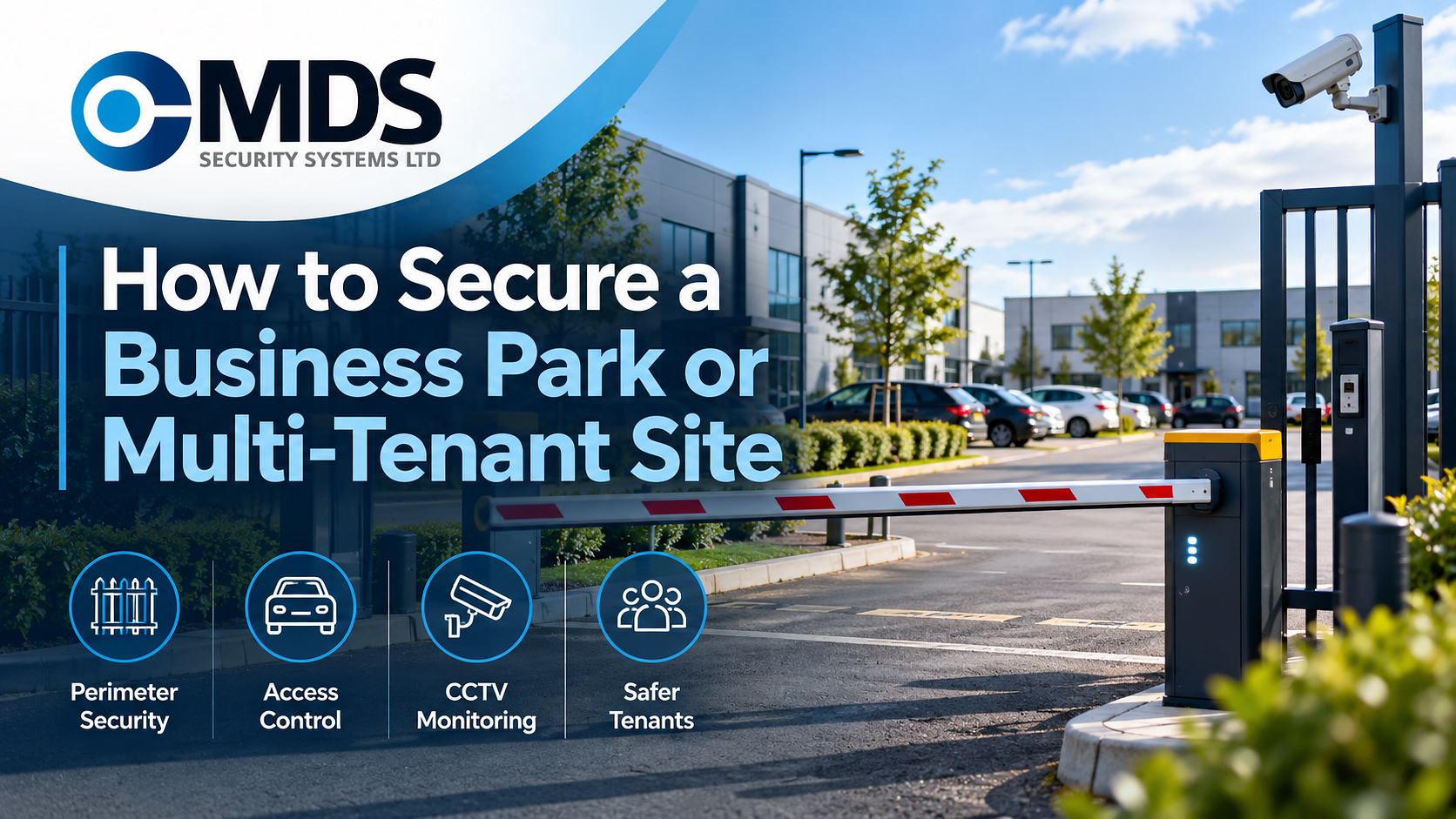
Securing a business park is harder than protecting a single-tenant building. Different occupiers have different opening hours, visitors, deliveries and risk levels, while shared roads, car parks, entrances and services can fall between responsibilities.
This guide explains how property managers, facilities teams and landlords can build a practical, joined-up security plan for multi-tenant commercial sites.
Quick Answer: What Is The Best Way To Secure A Business Park?
The best way to secure a business park is to use layered protection: assess the risks, strengthen the perimeter, control access, improve CCTV and lighting, agree tenant procedures and maintain equipment.
No single product solves every risk. Gates, CCTV, guards, access control and policies all do different jobs, so the strongest sites combine people, processes and technology.
Why Multi-Tenant Security Is Different
Multi-tenant sites create shared risk. One occupier may run late shifts, another may receive early deliveries, and another may welcome public visitors during the day. If each tenant works in isolation, access rules become inconsistent and weak points are easy to miss.
Set Clear Responsibility Boundaries
A good plan separates landlord, managing agent and tenant responsibilities. The site owner or manager usually controls the shared perimeter, vehicle entrances, common areas, external lighting, car parks and estate-wide systems. Tenants usually control their own internal space, staff policies and stock handling.
What The Site Manager Should Control
The site manager should own the shared rules: access routes, visitor procedures, out-of-hours access, incident reporting, emergency contacts and equipment maintenance.
What Tenants Should Control
Tenants should manage their own staff credentials, visitors, contractors, internal alarms and sensitive rooms, while following the site-wide rules for shared areas.
Start With A Site Security Survey
Before adding equipment, walk the whole site during the day, after dark and during quieter periods. Look for damaged fencing, unlocked gates, overgrown planting, blind corners, poorly lit walkways, uncontrolled pedestrian cut-throughs and loading bays that remain open after hours.
Map every entrance, fire exit, shutter, service road and pedestrian route. On older estates, it is common to find doors, side gates or delivery routes that nobody has reviewed for years.
Prioritise The Highest-Risk Areas
Most business parks should prioritise boundaries, car parks, service yards, reception areas, loading docks and shared pedestrian routes.
Check After Dark
A site that looks secure at 10am can feel very different at 8pm. Test lighting levels, camera coverage, sightlines and the route from parking areas to building entrances after dark.
Secure The Perimeter First
The perimeter is the first line of defence. Repair broken fencing, remove easy climbing points, close gaps and make it obvious where authorised visitors should enter. For sites with weak boundaries, fences and perimeter protection help define the site and direct people towards controlled entry points.
Control Vehicle Entrances
Vehicle entrances should match the site’s traffic pattern. Automatic barriers can help manage regular staff and visitor traffic, while automatic gates may be better when stronger perimeter closure is needed outside working hours.
When To Consider Stronger Vehicle Protection
If the site contains high-value assets, public-facing areas or vulnerable building fronts, standard barriers may not be enough. In higher-risk layouts, road blockers may be appropriate as part of a wider risk-led design.
Manage Pedestrian Access And Shared Areas
Business parks often have more pedestrian routes than managers realise. Staff, contractors, delivery drivers and visitors all move through shared areas.
Use Access Control Where It Adds Value
Access control works best when it is simple, consistent and actively maintained. Shared entrance doors, service corridors, reception areas and restricted zones should have clear rules for who can enter and when. Fobs, cards, keypads or mobile credentials must be issued and revoked quickly.
Avoid Credential Creep
Old fobs and forgotten contractor passes are a common weakness. Run regular audits, revoke unused credentials and make each tenant responsible for reporting leavers promptly.
Use Turnstiles For Controlled Footfall
Where a site needs to manage pedestrian access at a boundary, turnstiles can help prevent casual entry without relying only on a vehicle gate. For fenced perimeters, a full-height fenceline turnstile can support tighter control.
Use CCTV, Lighting And Monitoring Together
CCTV is most effective when it is supported by good lighting, clear signage and a response process. Cameras should cover vehicle entrances, pedestrian routes, reception points, loading bays, car parks and known blind spots.
A well-designed CCTV system should help deter unwanted activity, support investigations and give managers better visibility across shared areas. Camera positioning should be reviewed after any building change, landscaping work or recurring incident.
Think About Privacy And Data Protection
CCTV and ANPR may capture personal data. The ICO says organisations using surveillance systems should identify and document a lawful basis under UK GDPR and provide clear information, such as signage, so people understand the monitoring taking place.
Keep Footage Useful
Set regular checks for image quality, recording, time stamps and camera alignment. A camera that points at a hedge or records a blurred number plate is not giving the site useful protection.
Plan For Vehicles, Deliveries And Pedestrian Safety
Security and safety overlap on business parks. HSE guidance says pedestrian and vehicle routes should be separated where possible and crossing points should be properly marked and protected. That matters in shared yards, car parks and loading areas.
Separate Movements Where Possible
Use marked walkways, speed controls, one-way routes, delivery zones, barrier positions and signage to keep people away from moving vehicles. Avoid forcing pedestrians through vehicle barrier lanes or loading areas.
Do Not Block Emergency Access
Gates, barriers and bollards should improve control without blocking emergency services. Mark emergency routes clearly and include them in maintenance checks.
Use Guards And Patrols Where The Risk Justifies It
Security officers can add value where there is high footfall, regular out-of-hours activity, multiple entrances or a history of incidents. They can manage visitors, challenge suspicious activity, support tenants and respond to alarms.
Define The Guarding Model
Use static posts for gatehouses, receptions or high-risk entrances. Use mobile patrols for larger estates, car parks and service yards. Patrol patterns should not be predictable, and handover logs should record incidents, faults and tenant concerns.
Check Licensing
Where licensable security work is being carried out, check SIA licence requirements. GOV.UK warns that paying someone to work in security without the correct SIA licence can lead to penalties.
Do Not Ignore Cyber And Network Security
Modern buildings use connected access control, CCTV, intercoms, Wi-Fi, lighting and building management systems. If everything sits on one flat network, a weakness in one area can become a bigger site risk.
Segment Shared Networks
Keep tenant networks separate from each other, and keep building systems on their own controlled network. NCSC guidance explains that network segmentation helps limit the impact of compromise by grouping and isolating systems according to risk and trust.
Control Remote Access
Remote access for managers or maintenance providers should use strong authentication, named accounts and clear audit logs. Shared passwords should be avoided.
Create A Six-Month Improvement Roadmap
Month 1: Survey And Quick Fixes
Complete the baseline survey, repair obvious boundary weaknesses, improve temporary lighting and agree an incident-reporting process with tenants.
Months 2 To 3: Control Access
Prioritise entrances, car parks and loading areas. Add or improve barriers, gates, signage, visitor processes and credential controls.
Months 4 To 6: Integrate And Review
Connect CCTV, access control, monitoring and reporting wherever practical. Review incidents, tenant feedback and maintenance records, then adjust patrols and equipment settings.
Frequently Asked Questions
Who is responsible for security on a multi-tenant site?
Responsibility is usually shared. The landlord or managing agent normally controls common areas, car parks, external entrances and estate-wide systems, while each tenant manages its own internal space and staff procedures. The lease and service charge structure should make this clear.
Do business parks need CCTV signs?
Yes, where CCTV or ANPR is used, people should be told that monitoring is taking place and why. Signs should be visible before people enter monitored areas.
How often should security systems be reviewed?
Review incidents and faults monthly, inspect cameras and access control regularly, and complete a wider risk review at least once a year or after major tenant, layout or crime changes.
Secure Your Business Park With MDS Security
Securing a business park or multi-tenant site takes more than a camera, a gate and a set of tenant rules. It needs a layered plan that combines perimeter protection, controlled access, CCTV, lighting, safe traffic routes, clear responsibilities and ongoing review.
MDS Security can assess your site and recommend the right combination of gates, barriers, turnstiles, CCTV and perimeter protection for your buildings, tenants and shared spaces.
Contact MDS Security today to book a site survey and create a practical security plan for your business park or multi-tenant site.