
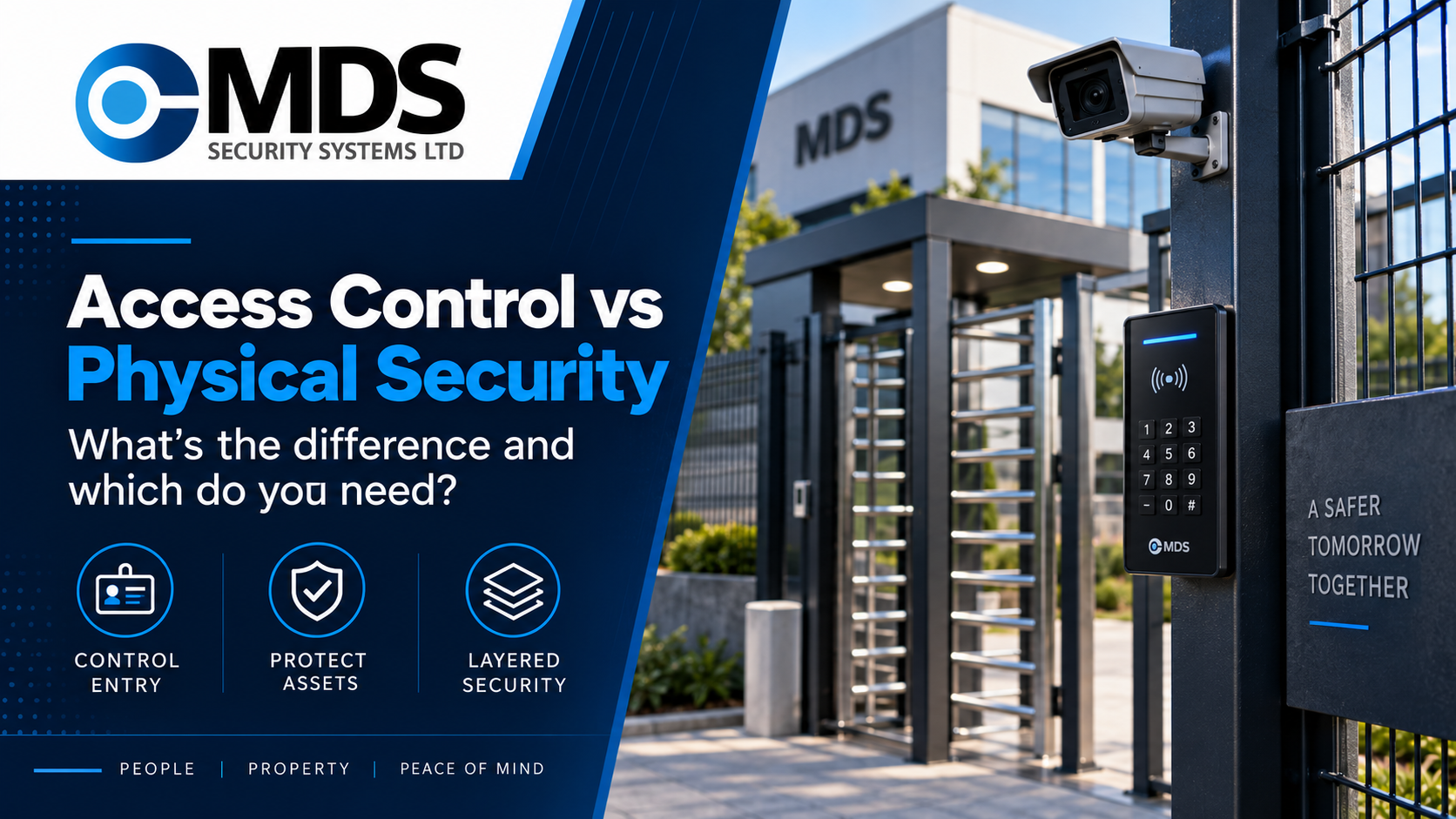
Access control and physical security are closely linked, but they are not the same thing. The simplest answer is this: access control decides who can enter a space, while physical security protects the whole site from real-world threats.
For most commercial premises, the right choice is not one or the other. You usually need both, layered around the actual risks at your building. A well-planned system might combine turnstiles, gates, barriers, CCTV, fencing and controlled entry points so people can move safely while unauthorised access is restricted.
This guide explains the difference, where each approach works best, what affects cost, and how to decide what your site needs before you invest.
Quick Answer: Which Should You Choose?
If you need to control staff, visitors or contractors entering specific doors, floors or rooms, you need access control. If you need to secure the perimeter, deter intruders, protect vehicles, control car parks or reduce wider site risk, you need physical security.
In practice, they should work together. ProtectUK advises that access control planning should consider emergency situations because security should not compromise safety. That is a useful principle for any commercial building: a secure site must still allow safe escape, authorised access and sensible day-to-day operation.
What Is Access Control?
Access control is the system of hardware, software and rules that decides who can enter a particular area. It answers three questions: who are you, are you authorised, and should the system let you in now?
Common access control methods include PIN keypads, fobs, cards, mobile credentials, intercom release, biometric readers and cloud-managed permissions. A small office might only need a keypad and electronic lock. A larger site may need multiple readers, user groups, time schedules, visitor permissions and audit logs.
The main benefit is precision. You can allow staff into the areas they need, restrict sensitive rooms and remove access quickly when someone leaves. For offices, schools, warehouses and regulated workplaces, that visibility can be just as valuable as the lock itself.
What Is Physical Security?
Physical security is the wider strategy for protecting people, buildings, assets and operations from physical threats. It includes equipment, site design, procedures and human response.
Examples include perimeter fencing, vehicle gates, automatic barriers, road blockers, lighting, CCTV, locks, doors, reception processes and patrols. Its job is usually to deter, detect, delay and help respond to threats before they reach the areas that matter most.
The Health and Safety Executive explains that risk management is a step-by-step process for controlling workplace risks. The same thinking applies to security. Start with the real risks, then choose proportionate controls rather than buying isolated equipment and hoping it solves the problem.
Access Control vs Physical Security: The Key Difference
| Factor | Access control | Physical security |
| Main purpose | Regulates who can enter a specific area | Protects the whole site from physical threats |
| Typical locations | Doors, turnstiles, gates, lifts and restricted rooms | Boundary, car park, entrances, buildings and assets |
| Best for | Managing users, permissions and audit trails | Deterring intrusion, vehicle misuse, theft and damage |
| Common weakness | Does not secure the wider site by itself | Can be too broad without identity-based control |
Access control is a focused layer. Physical security is the full framework around it. A card reader on a door is useful, but it will not stop a vehicle entering an open yard. A strong gate is useful, but it cannot show which staff member accessed a restricted store room. That is why the two should be designed together.
Cost And Complexity: What Affects The Budget?
Access control is often priced around entry points, credentials, controllers, software and ongoing support. More doors, more users and more complex permissions increase the cost. Cloud systems may reduce on-site server requirements but can add subscription fees.
Physical security costs depend more on site scale and environment. A warehouse yard may need gates, road blockers, barrier arms, perimeter works, lighting and camera coverage. A smaller office may need little more than controlled entrance doors and visitor management.
The important TAYA answer is that cheapest is rarely the safest measure. The right system is the one that matches the risk. Overspecifying wastes budget, while underspecifying creates a false sense of security.
Where Access Control Works Best
Access control is strongest where you need traceability and controlled movement. It is a good fit for offices, staff entrances, internal doors, schools, health settings, apartment blocks, data rooms, plant rooms and stock areas.
It can also support vehicle and pedestrian entry. For example, a pedestrian gate can be connected to a keypad, fob reader or intercom so visitors do not have uncontrolled access to the wider property.
For higher-security areas, biometric access may be considered, but it needs extra care. The ICO explains that biometric data used to uniquely identify someone is treated as special category data under UK GDPR, so organisations should consider necessity, proportionality, lawful basis and suitable alternatives before using it. Read the ICO guidance on biometric recognition.
Where Physical Security Works Best
Physical security is strongest where the threat starts outside the building. This includes car parks, yards, loading areas, industrial estates, schools, public-facing premises and sites with valuable vehicles or equipment.
Here, the goal is to make unauthorised entry harder and more visible. A layered system may include boundary protection, vehicle control, entrance management, good lighting and CCTV systems to support detection and review. For sites with specific vehicle threats, barriers or blockers may be more appropriate than a standard gate.
How The Two Systems Should Work Together
The strongest security plans use physical measures to control the environment and access control to manage identity. A gate or barrier controls the vehicle route. A turnstile controls pedestrian flow. CCTV records activity. Access software logs who entered and when.
Integration reduces blind spots. If a forced door event occurs, cameras can help verify it. If a staff pass is used outside normal hours, the system can flag it. If a fire alarm activates, doors and access routes must behave safely, not simply stay locked.
This is where a professional survey matters. The installer should look at users, opening hours, emergency routes, deliveries, visitors, vehicles, power failures and maintenance access before recommending hardware.
Common Mistakes To Avoid
The first mistake is treating access control as a complete security strategy. It is not. It manages authorised entry, but it does not automatically protect the perimeter, car park or external assets.
The second mistake is installing physical barriers without thinking about daily use. If a barrier slows deliveries, frustrates staff or blocks emergency access, people will find ways around it.
The third mistake is ignoring maintenance. Locks, readers, barriers, cameras and gates all need testing. Without servicing, a system that looked secure on day one can become unreliable or unsafe.
Questions To Ask Before You Invest
- What are we protecting: people, vehicles, stock, data, equipment or the whole site?
- Where is the highest risk: perimeter, reception, car park, internal rooms or loading areas?
- Who needs access, and how often do their permissions change?
- Do we need audit logs for compliance, insurance or internal control?
- How will the system behave during a fire alarm or power failure?
- Can new doors, users or locations be added later?
FAQs
Is access control part of physical security?
Yes. Access control is one part of physical security. It manages authorised entry, while wider physical security includes barriers, gates, locks, lighting, surveillance and procedures.
Do small businesses need both?
Often, yes. A small business may only need simple measures, such as controlled entrance doors, secure key management and basic perimeter protection, but the same layered principle still applies.
Can access control work with gates and barriers?
Yes. Access control can be integrated with vehicle gates, pedestrian gates, turnstiles and barriers so approved users can enter while unauthorised traffic is restricted.
Choose The Right Mix With MDS Security
Access control and physical security should not compete. They should support each other. The right solution depends on your site layout, risks, users, vehicles and operational needs.
MDS Security can assess your premises and recommend a practical combination of controlled entry, barriers, gates, perimeter protection and supporting systems. Contact MDS Security to book a site survey and choose the right security mix for your property.