
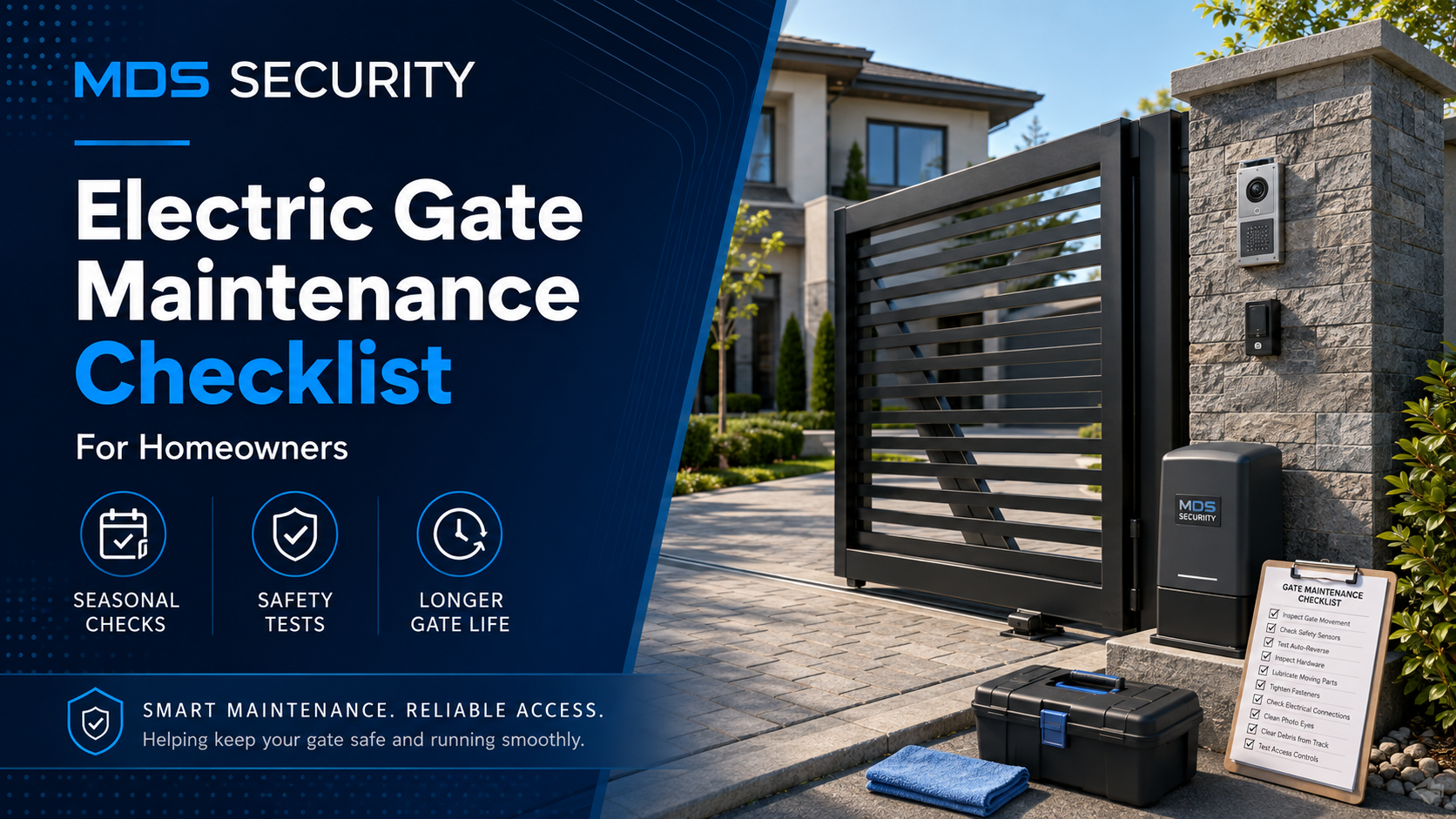
An electric gate is convenient, secure and hard-working, but it is still a powered mechanical system. Like a car, it needs routine care to stay safe and reliable.
This guide is for homeowners who want a practical, plain-English maintenance checklist. It explains what you can safely check yourself, what should be left to a qualified gate engineer and which warning signs mean your gate needs attention before a small fault becomes an expensive repair.
Quick Answer: What Maintenance Do Electric Gates Need?
Most domestic electric gates need simple monthly checks, seasonal cleaning and a professional service at least once a year. Gates that are used heavily, shared by several households or fitted at commercial premises may need servicing more often.
Homeowners can usually clean photocells, clear tracks, check for obvious damage, test remotes and listen for unusual movement. A professional should handle force testing, electrical faults, control board issues, motor problems and major alignment work.
Regular maintenance matters because a gate that is slow, noisy, misaligned or missing safety checks can become unreliable and potentially unsafe. The Health and Safety Executive explains that powered gates need proper design, risk assessment, information for users and routine maintenance to remain safe. HSE powered gate safety guidance
Monthly Electric Gate Checks You Can Do Yourself
Once a month, take a few minutes to watch the gate complete a full open-and-close cycle. It should move smoothly without scraping, juddering, stopping halfway or making grinding noises.
- Check the gate leaf, posts, hinges, rollers and brackets for visible damage.
- Look for rust, corrosion, loose fixings or signs that the gate has dropped.
- Clean photocell lenses with a soft cloth so dirt, cobwebs or water marks do not block the beam.
- Test remotes, keypads, intercoms and any smartphone access controls.
- Check warning lights and signs are visible and working.
- Make sure children, pets, bins, plants and parked vehicles are kept away from the gate path.
Do not force a gate that is stiff or stuck. If the motor is still engaged, pushing it can damage the gearbox, hinge arrangement or drive system.
Spring Maintenance: Recover From Winter Weather
Spring is the best time to deal with dirt, grit and moisture left behind by winter. Sliding gates need particular attention because the track can collect debris that affects movement.
Clear leaves, grit and stones from the track, then check that the rollers move cleanly. For swing gates, look around the hinge points and gate posts for movement, sagging or signs that the gate is catching the ground.
Lubricate suitable moving parts with the lubricant recommended by your installer or manufacturer. Silicone or lithium-based products are often used for gate hardware, but avoid thick, sticky grease where it may attract grit or damage seals. When in doubt, ask MDS during your next electric gate repairs, maintenance and servicing visit.
Summer Checks: Heat, Dust And Heavy Use
Summer can mean more visitors, more deliveries and more frequent gate use. Heat can also expose weak cabling, worn plastic housings and tired batteries.
Check the motor housing, control box and visible cable runs for cracks, warping or water damage. Tighten only fixings you can safely access and avoid opening electrical equipment. If your gate has solar support, keep panels clean and free from shade where possible.
Run the gate through a full cycle using each normal access method. If the remote works but the keypad does not, or the intercom calls but does not release the gate, note the fault clearly before booking support.
Autumn Checklist: Prepare For Leaves, Rain And Cold
Autumn is when many gate problems start. Leaves, mud and standing water can interfere with tracks, photocells and underground motor boxes.
- Clear organic debris before it rots into the track or drainage channel.
- Check that water drains away from motor housings and control boxes.
- Inspect visible conduit for damage from garden tools, rodents or weather.
- Check seals around covers and housings where accessible.
- Trim back plants that interrupt safety beams or restrict gate movement.
This is also a good time to test the manual release, especially before winter storms increase the chance of a power cut.
Winter Checklist: Cold Weather And Power Cuts
Cold weather can make gates feel heavier and reveal weak batteries. Ice, frost and swollen timber can also affect the movement of some installations.
Keep tracks and the immediate gate area clear. Use suitable de-icer with care and avoid heavy use of salt around metalwork and electrical components. If your gate is timber, check that swelling has not reduced clearance.
Test the battery backup if one is fitted, and make sure you know where the manual release key is stored. For more detail, read MDS Security’s guide to opening electric gates manually during a power cut.
Sliding Gate Maintenance
Sliding gates rely on clean movement along the track or support system. A tracked sliding gate needs the track kept clear, level and free from stones. Check for worn wheels, damaged rack teeth and any grinding noise near the motor.
Cantilever gates do not run along a ground track, but they still need their rollers, guides and support structure checked. If a sliding gate begins to lean, drag or close unevenly, stop using it and ask an engineer to inspect it. You can also review MDS Security’s sliding gates page for system options.
Swing Gate Maintenance
Swing gates depend on hinges, arms and posts remaining stable. Look for dropping gate leaves, widened gaps, worn hinges or arms that no longer sit squarely. On windy sites, watch whether the motor strains more than usual.
Underground operators need particular care because water ingress can cause faults. Never open an underground motor box unless you are competent and it is safe to do so. MDS Security’s swing gates page explains where these systems are commonly used.
Safety Sensors, Edges And Force Testing
Safety devices are not decorative extras. They help prevent a powered gate from trapping, crushing or striking a person, pet or vehicle.
Clean photocells monthly and test that the gate responds when the beam is interrupted. Safety edges should also be checked so the gate stops or reverses if contact is detected. The HSE notes that additional safeguards such as pressure-sensitive strips and photoelectric devices may be needed where risk assessment identifies a higher-risk powered gate. HSE safety notice on electrically powered gates
Force testing should be carried out by a competent person using suitable equipment. MDS has a dedicated guide to electric gate safety sensors if you want to understand the different devices in more detail.
When Should You Call A Professional?
Call a qualified gate engineer if your gate is grinding, jerking, stopping without reason, ignoring safety devices or responding inconsistently to controls. You should also get help if the gate has been hit by a vehicle, moved out of alignment or suffered water damage.
Leave control board diagnostics, rewiring, motor work, gearbox repairs and compliance testing to professionals. HSE guidance makes clear that people who maintain or repair powered gates have a responsibility to leave the gate in a safe condition. HSE powered gate legal responsibilities
Simple Maintenance Log Template
A written log helps you prove what has been checked and when. Keep it near the control box or save a digital copy.
| Date | Task | Issues Found | Action Taken | Next Due |
| Clean photocells | ||||
| Clear track or hinge area | ||||
| Test access controls | ||||
| Professional service |
FAQs
How often should electric gates be serviced?
Most domestic electric gates should be serviced at least once a year. Gates with heavy use, shared access or commercial duty may need six-monthly or more frequent checks.
How much does electric gate servicing cost?
Costs vary depending on the gate type, access system, condition and level of testing required. Treat any fixed online price as guidance only until the installer has assessed the system.
Can I maintain electric gates myself?
Yes, you can carry out basic cleaning, visual checks and simple testing. Do not attempt electrical repairs, force testing, motor work or major realignment unless you are suitably qualified.
What are the most common electric gate faults?
Common faults include dirty photocells, flat remote batteries, debris in sliding tracks, worn hinges or rollers, moisture in control boxes and failing motors.
Book An Electric Gate Service With MDS Security
Regular maintenance keeps your gate safer, smoother and more dependable. It also helps you catch small issues before they become costly faults.
Whether you have automatic gates at home or a shared access system that needs scheduled support, MDS Security can inspect, service and maintain your installation. Contact the team today to book a professional gate inspection and keep your electric gate working properly all year round.