
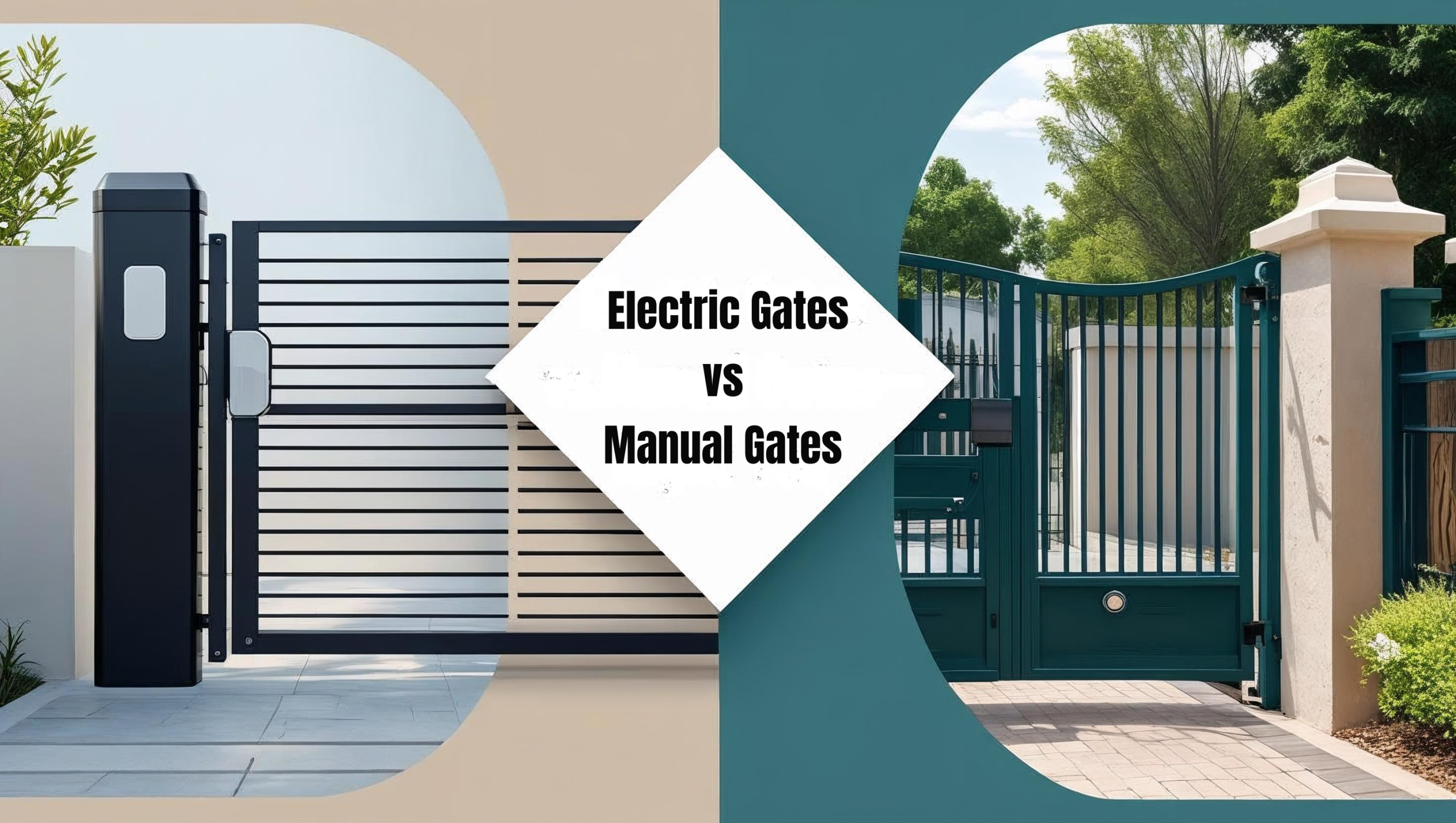
Choosing a gate for your property is a big decision, balancing security, convenience, looks and cost. With two main options, electric gates and manual gates, how do you know which is best for you?
This post will compare the pros and cons of both electric and manual gates so you can make an informed decision that suits your lifestyle, budget and security needs.
Why Do Gate Systems Matter?
Gates are more than just a barrier; they contribute to your property’s security, privacy and curb appeal. Whether for a residential home, business premises or estate entrance, the right gate system is a seamless blend of function and design. But the “right gate” depends on several factors unique to your needs.
Let’s break down the key differences between electric and manual gates to decide which is right for you.
Electric Gates
What Are Electric Gates?
Electric gates, also known as automated gates, open and close with the help of an electric mechanism. Typically operated via a remote control, keypad, keycard or even smartphone apps, these gates are a convenient and modern solution for entry and exit.
Pros of Electric Gates
- Convenience: With electric gates you can enter or exit your property without getting out of your car, perfect for bad weather or busy people.
- Enhanced Security: Many electric gates come with additional security features such as cameras, intercom systems and keypad entry, so you can feel safe.
- Aesthetic Appeal: Electric gates often have sleek modern designs that enhance your property’s visual appeal and add a touch of class.
- Customisation: Automated gates are highly customisable in terms of size, material and operational mechanism.
- Integration with Smart Systems: Many electric gates can be integrated with smart home devices so you can control them via your mobile phone.
Cons of Electric Gates
- Higher Costs: Electric gate systems are more expensive upfront compared to manual gates due to automation and extra features.
- Maintenance Requirements: Electric gates need periodic maintenance to keep the mechanisms and control systems in good condition.
- Power Dependence: They rely on power so if the power goes out they won’t work unless you have a backup power solution.
- Installation Complexity: Installation is more complex and time consuming compared to a manual gate.
Manual Gates
What Are Manual Gates?Manual gates, as the name suggests, operate without any electronic assistance. These gates require physical effort to open and close but are a more traditional and budget friendly option.
Pros of Manual Gates
- Cost Effective: Manual gates are cheaper to install and maintain, perfect for those on a budget.
- No Power Needed: Since manual gates don’t need electricity, they are not affected by power outages or system failures.
- Simple Maintenance: With fewer components, manual gates have lower maintenance requirements, reducing long term costs.
- Durable: Built simply and sturdily, they can withstand wear and tear without frequent repairs.
- Versatile Styles: Like electric gates, manual gates are available in various materials and designs to match your property’s style.
Cons of Manual Gates
- Less Convenient: Opening and closing the gate manually can be inconvenient, especially during bad weather or for those with limited mobility.
- Basic Security: Manual gates lack the advanced security features of electric gates such as keypads, intercoms or sensors.
- Effort Intensive: For larger or heavier gates, using a manual gate can be physically demanding, especially for frequent use.
Factors to Consider When Choosing Between Electric and Manual Gates
Now that we’ve covered the pros and cons, here are some factors to help you decide:
1. Purpose of the Gate
- Are you looking for enhanced security for your property? Electric gates with advanced security features might be the better investment.
- If your needs are basic such as containing pets or marking property boundaries, a manual gate might be enough.
2. Budget
- Electric gates have higher installation and maintenance costs. If you’re on a tight budget, you may prefer the affordability of manual gates.
- However for long term use, the convenience and added property value of electric gates might outweigh the initial cost.
3. Frequency of Use
- For properties with high traffic such as businesses or large households, the automation of electric gates can save you a lot of time and effort.
- For less frequent use such as gates marking secondary entrances, manual gates might be sufficient.
4. Accessibility
- For people with physical limitations, electric gates are unbeatable in terms of convenience and accessibility.
- For those with limited mobility, manual gates can be a challenge.### 5. Style
- Both manual and electric gates can be customised to your taste, modern or classic. But electric gates are more high-tech.
6. Environment and Weather
- Electric gates can fail during power outages unless you have backup power. If you live in an area with frequent outages, this might be a problem.
- Manual gates are weather proof, but heavy rain can make opening and closing a hassle.
Now Decide
Whether you choose electric gates or manual gates, the decision comes down to your specific needs and budget and lifestyle. If convenience, security and smart integration matter most to you, electric gates are worth it. But if simplicity, affordability and durability are your top priorities, a manual gate won’t let you down.
Get Expert Advice
Still unsure which gate system to choose? Talk to our experts. Need help with your property assessment or design selection? We can help with that too.
Talk to a Gate Specialist Today!