
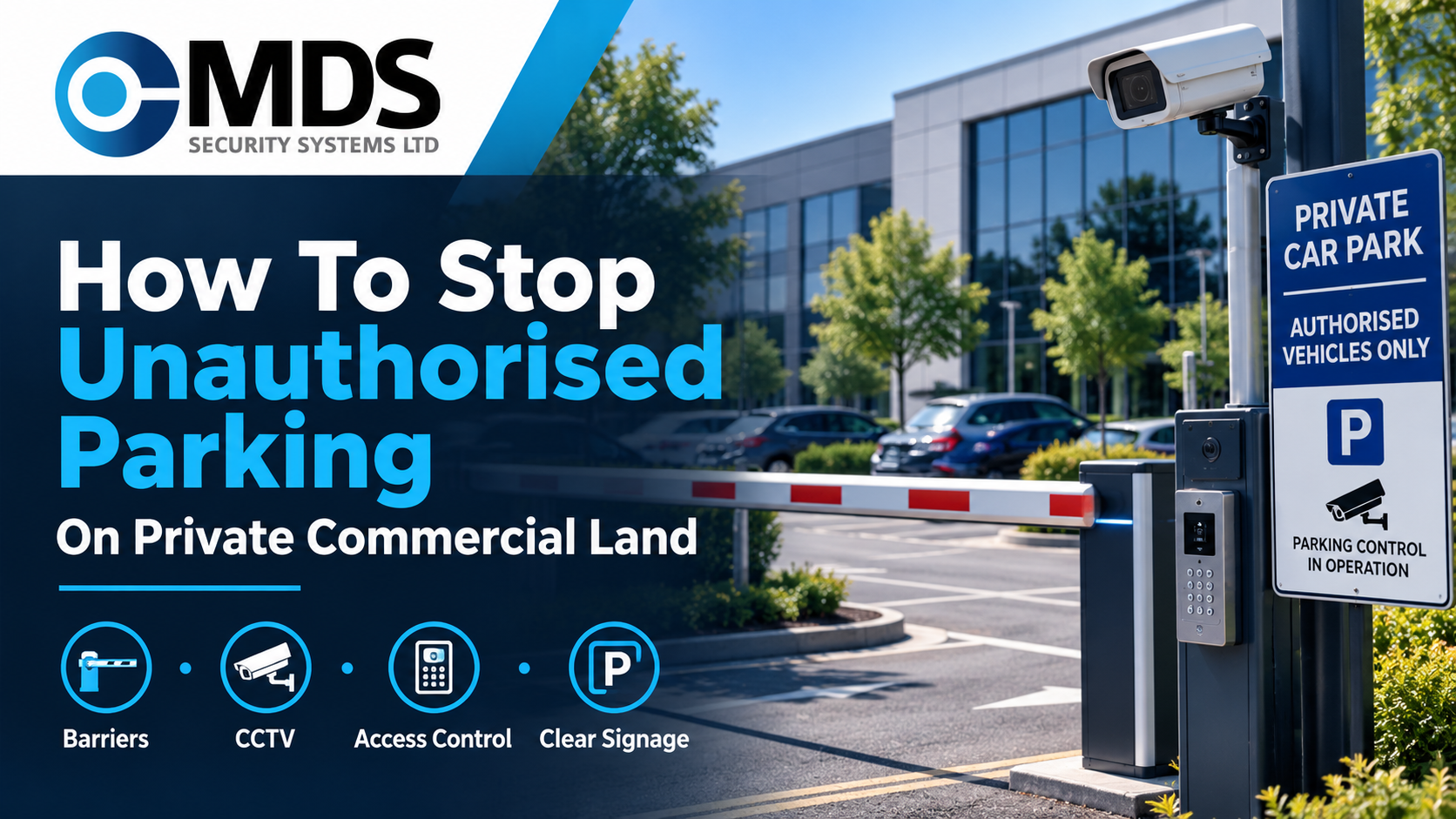
Unauthorised parking can quickly turn a private commercial car park into a daily operational problem. Customer bays get blocked, staff spaces disappear, tenants complain, deliveries are delayed and the people who should be using the site are left frustrated.
The most effective approach is layered: confirm your rights over the land, prevent easy misuse, make the parking terms clear, monitor what happens and use lawful enforcement where needed.
This guide is for business owners, facilities managers, landlords and site managers who need to keep parking spaces available for authorised users.
Quick Answer: What Is the Best Way to Stop Unauthorised Parking?
The best way to stop unauthorised parking is to combine physical access control, clear signage, active monitoring and lawful enforcement. For many commercial sites, that means barriers or gates at the entrance, marked bays, visible terms, CCTV or ANPR where appropriate, and a clear process for repeat offenders.
Signs alone rarely solve a persistent problem if drivers can still enter and park without challenge. Likewise, a barrier may stop casual misuse, but it will not replace properly displayed parking terms where enforcement is needed.
Unauthorised Parking vs Illegal Parking
Illegal parking
Illegal parking usually refers to public highway offences, such as parking on double yellow lines, blocking a junction or breaching local authority restrictions. These matters are normally handled by councils or the police.
Unauthorised parking
Unauthorised parking on private commercial land is different. It usually means a driver has parked on land they do not have permission to use, or has ignored the parking terms displayed on site. In most cases, this is a civil issue based on contract and property rights, not a police matter.
What this means for your business
You need a process that stands up commercially and legally. That means proving who may park, what the rules are, how drivers were informed and what evidence supports any action you take.
Step 1: Confirm Your Right to Control the Land
Before installing equipment or issuing parking charges, check who controls the land. You must own the car park, lease it, manage it under contract or hold written authority from the landowner to set and enforce parking terms.
Then map the site. Mark customer spaces, staff bays, tenant spaces, visitor bays, disabled bays, delivery areas and emergency access routes. Also record when the problem happens. Commuter misuse, event parking and residential overspill all need slightly different controls.
Step 2: Stop Easy Access With Physical Controls
The simplest unauthorised parking problem is the one prevented at the entrance. Physical access control stops many drivers before enforcement is needed.
Use barriers where traffic flow matters
Automatic barriers are useful for commercial car parks with regular vehicle movement. They can be linked with fobs, keypads, intercoms, permits or number plate recognition to let authorised users through while discouraging casual misuse.
For quieter entrances, manual barriers can offer a lower-cost way to close off spaces outside business hours or manage occasional access points.
Keep emergency routes clear
Any barrier, bollard or gate must be planned so emergency services can still reach the site. Do not block fire routes, service lanes or access points needed by ambulances, delivery vehicles or maintenance teams.
Use gates for stronger closure
Where you need full site closure, automatic gates may be more suitable than a rising arm barrier. Gates work well where the whole car park or yard needs to be secured out of hours.
Secure weak boundaries
If drivers or pedestrians can bypass the main entrance, the wider boundary also needs attention. Fences and perimeter protection help direct vehicles and people towards controlled entry points.
Step 3: Use Clear Signage and Parking Terms
Clear signage is essential. If you want to enforce parking rules, drivers need to see the terms before they park. Signs should explain who may use the car park, any time limits, permit requirements, visitor rules and what happens if the terms are breached.
Do not hide key conditions in small print. Place signs at entrances and around the parking area, especially near bays where misuse is common.
GOV.UK guidance on private parking charges explains the recovery of unpaid parking charges on private land under Schedule 4 of the Protection of Freedoms Act 2012. Use the correct legal route rather than treating private parking charges as criminal fines.
Step 4: Add CCTV, ANPR and Permit Monitoring
Monitoring helps you prove what happened. CCTV systems can record entrances, exits, parking bays and repeat misuse points. ANPR can log vehicle registration marks as vehicles enter and leave, making it easier to identify overstays or unauthorised use.
Digital permits can help staff, tenants and approved visitors park without confusion. Instead of manually checking paper permits, a managed system can compare authorised vehicles against your allowed list.
Data protection duties
CCTV and ANPR can process personal data, including vehicle registration marks. The ICO says organisations using surveillance systems should handle them fairly, lawfully and transparently, with appropriate signage and governance.
ICO guidance on CCTV and video surveillance should be checked before installing or expanding monitoring.
Practical compliance checks
Decide why you are monitoring, who can view footage, how long recordings are kept and how people can make enquiries. Your signage should tell drivers that surveillance is in use before they enter the monitored area.
Step 5: Use Lawful Parking Enforcement
If drivers continue to ignore your terms, you may need an enforcement route. Private parking charges are not the same as council penalty charge notices. They are usually based on the parking contract created by your signage and site terms.
DVLA guidance on release of keeper information explains that vehicle keeper details are only released where there is reasonable cause, and private parking operators pursuing parking charges generally need to be members of an appropriate Accredited Trade Association.
Evidence to collect
For each incident, keep timestamped photographs showing the vehicle, registration plate, location, nearby signage and the reason the vehicle breached the rules. Weak evidence leads to weak enforcement.
Do not clamp or tow vehicles yourself
Do not clamp, tow, block in or otherwise immobilise a vehicle on private land unless you have specific lawful authority. GOV.UK guidance on the wheel-clamping ban explains that the Protection of Freedoms Act 2012 made clamping, towing or blocking-in vehicles without lawful authority an offence in England and Wales.
Step 6: Deal With Abandoned Vehicles Properly
A vehicle that has simply parked without permission is not always abandoned. Signs of abandonment may include long-term presence, flat tyres, missing plates, damage, rubbish inside or no response from the keeper.
Record the details and report suspected abandoned vehicles through the correct council route. You can report an abandoned vehicle through GOV.UK if you believe the vehicle may have been dumped.
Action Checklist for Private Commercial Land
- Confirm you own, lease or manage the land with written authority.
- Map staff, visitor, tenant, customer and delivery spaces.
- Identify when and where unauthorised parking happens.
- Install barriers, gates or bollards where physical control is needed.
- Display clear parking terms before drivers park.
- Use CCTV, ANPR or permits only with proper data protection controls.
- Keep evidence for repeat offenders and enforcement cases.
- Never clamp, tow or block vehicles without lawful authority.
- Report genuinely abandoned vehicles to the local council.
Frequently Asked Questions
How do I stop people parking on my private commercial land?
Start with clear signs and physical access control. For persistent issues, add monitoring, permits and lawful enforcement. The best solution is usually a combination of barriers, signage, CCTV or ANPR and a clear management process.
Can I issue parking charges on private land?
You may be able to, but only if you have authority over the land, clear terms are displayed and the process is handled correctly. If keeper details are needed, use an accredited and compliant route.
Can I clamp a car parked on my land?
In England and Wales, private clamping or towing without lawful authority is not a safe route and can be an offence. Use lawful parking enforcement and physical prevention instead.
What is the best physical solution?
For busy commercial entrances, automatic barriers are often the most practical choice. For out-of-hours closure, gates may be better. For individual bays, lockable bollards may help.
Get Help Controlling Unauthorised Parking
Stopping unauthorised parking on private commercial land takes a joined-up plan that combines clear rules, controlled entry, good monitoring and lawful enforcement.
MDS Security can help you assess your site and design a practical solution using barriers, gates, CCTV, perimeter protection and access control.
Contact MDS Security Systems Ltd today to book a site survey and keep your commercial car park clear, controlled and working for the people who should be using it.