
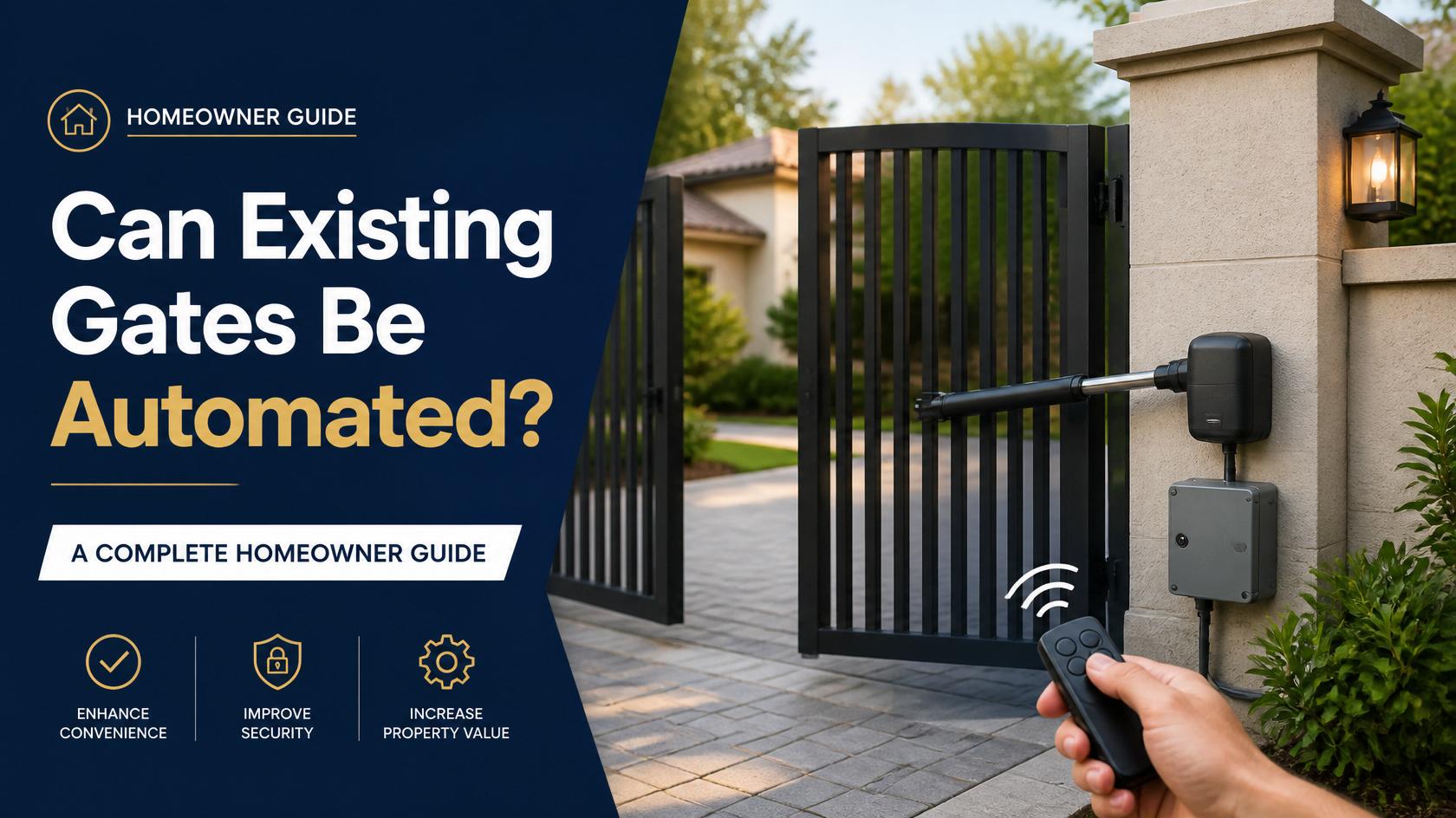
If you already have manual gates and want hands-free access, you may not need to replace your whole entrance. In many cases, existing gates can be automated safely and cost-effectively, provided they are structurally sound and suitable for motorised operation.
This guide explains how to assess your current gates, what components are required, how much automation may cost, and what safety and planning considerations homeowners should understand before moving forward.
Quick Answer: Can Existing Gates Be Automated?
Yes, most existing gates can be automated. If your gate opens and closes smoothly, is structurally sound, and is supported by strong posts or pillars, it may be a good candidate for automation.
Costs vary depending on gate type, weight, motor choice, access control and installation complexity. As a general guide, automating existing manual gates may cost between £1,500 and £4,000. For a wider pricing overview, read our guide to UK electric gate costs.
Which Types Of Gates Can Be Automated?
Both swing gates and sliding gates can usually be automated successfully.
Swing Gates
Swing gates open on hinges, much like a traditional door. They are suitable for properties with enough clearance behind the gate leaves.
If you are considering a residential upgrade, see our page on domestic residential swing gates.
Sliding Gates
Sliding gates move sideways rather than swinging open, making them useful for properties with limited driveway depth or restricted access.
There are two common sliding gate systems:
- Tracked sliding gates, which run along a ground track.
- Cantilever gates, which glide above the ground using a counterbalanced support system.
For more detail, read our guide to cantilever vs tracked sliding gates.
Benefits Of Automating Existing Gates
Convenience
Automated gates allow you to open and close your entrance from your vehicle using a remote control, keypad, intercom or smartphone access system.
Improved Security
Automatic gates help control who can access your property. They can also be combined with access control, intercoms and CCTV for added protection.
Kerb Appeal And Property Value
A well-installed automation system can improve the appearance and usability of your entrance. To explore this further, read Do Electric Gates Add Value To Your Property?.
Assessing Your Existing Gate For Automation
Before automating existing gates, a professional installer should check the condition of the gate and supporting structure.
Gate Material And Weight
Gate material and weight influence the type of motor required. Steel, wrought iron, aluminium and quality hardwood gates can often be automated, but heavier gates need stronger equipment.
Structural Condition
Look for signs of rot, rust, corrosion, warping, loose joints or damaged welds. Gates must be structurally sound before automation is installed.
Posts, Hinges And Supports
Posts, hinges and supporting columns must be strong enough to cope with repeated automatic movement. Weak fixings should be repaired or replaced first.
Smooth Manual Movement
Your gate should open and close smoothly by hand. If it sticks, drags or drops, those issues should be corrected before adding automation.
Site Considerations Before Installation
Every property is different, so a site survey is essential before installation.
Your installer should assess:
- Driveway width and available opening space.
- Swing arcs or sliding run-back distance.
- Ground levels and gradients.
- Drainage and underground services.
- Distance to the nearest power supply.
- Available space for motors, wiring and control equipment.
If you are unsure whether a sliding or swing system is best, read our comparison guide: Sliding vs Swing Gates.
What Components Are Needed?
Automating gates usually requires several core components.
Gate Motor
The motor provides movement. Options include above-ground arm motors, underground motors, ram operators and sliding gate motors.
Control Board
The control board manages the system and receives instructions from remotes, keypads, intercoms and safety devices.
Safety Devices
Automated gates should include suitable safety features such as photocells, safety edges, obstacle detection and emergency release options. The Health and Safety Executive provides guidance on powered gate safety.
Access Control
Access control options can include remote controls, keypads, GSM intercoms, video entry systems and smartphone access.
How Existing Gates Are Automated
1. Site Survey
A professional installer checks the condition of your gates, posts, power supply and available space.
2. System Design
The correct motor, control board, access control and safety devices are specified for your gate type and usage level.
3. Installation
The installer fits the motor, wires the control equipment and connects the power supply safely.
4. Testing And Handover
The system is tested, safety checks are completed, and you are shown how to operate the gate safely.
DIY Vs Professional Gate Automation
DIY gate automation may appear cheaper, but powered gates can be dangerous if installed incorrectly. Poor installation can lead to crushing risks, electrical faults, unreliable operation and non-compliance.
Professional installation helps ensure the system is correctly specified, safely installed and tested. Gate Safe also provides guidance for safe automated gate specification and installation: Gate Safe.
Maintenance And Lifespan
Automated gates need regular maintenance to remain safe and reliable.
Recommended checks include:
- Cleaning photocells and safety sensors.
- Lubricating hinges, rollers and moving parts.
- Checking motors, control panels and backup batteries.
- Testing manual release mechanisms.
- Arranging annual professional servicing.
For support, visit our electric gate repairs, maintenance and servicing page.
Do You Need Planning Permission?
Automation itself does not usually trigger planning permission. However, planning rules may apply if the gate height changes, the property is listed, or the entrance is next to a highway.
As a general rule, gates may need permission if they are over 1 metre high next to a highway used by vehicles, or over 2 metres high elsewhere. Always check local requirements before installation.
For official guidance, see the Planning Portal advice on fences, gates and garden walls, or read our guide to planning permission for electric gates.
Homeowner Checklist Before Automating Your Gates
- Check whether your gates open and close smoothly.
- Inspect posts, hinges and gate condition.
- Measure the entrance and available operating space.
- Take photos of the gate, posts and power supply location.
- Consider whether you need remotes, keypad entry, intercom or smartphone access.
- Ask for compliance documents, warranty details and servicing options.
Electric Gate Automation Across The North West
MDS Security installs, repairs and maintains automated gate systems across the North West, including:
Contact MDS Security
Automating your existing gates is a smart way to improve convenience, security and kerb appeal without replacing your current entrance.
At MDS Security, our team can assess your gates, recommend the right automation system and handle the installation safely from start to finish.
Contact MDS Security today to book a site survey and discover whether your existing gates can be automated.